
McDonald’s Spicy Buffalo Sauce Calories, Nutrition, Ingredients & Recipe
Spicy Buffalo Sauce $0.25 | 30 Cal.
McDonald’s Spicy Buffalo Sauce is one of the most popular hot and tangy condiments used in modern fast food culture. Known for its bold heat, buttery texture, and vinegar-based tang, it has become a global favorite for chicken wings, nuggets, fries, and sandwiches. One of the most recognized versions is served by McDonald’s, where it is paired with Chicken McNuggets® as a dipping sauce.
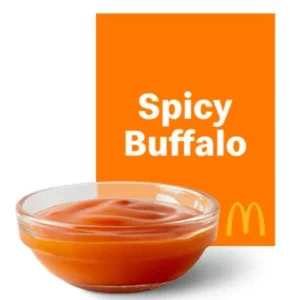
Spicy Buffalo Sauce
$0.25 | 30 Cal.
This guide explores everything about spicy buffalo sauce, including its nutrition facts, calories, ingredients, flavor profile, and homemade recipe. You will also learn how it compares to store-bought versions and how to make a healthier, customizable alternative at home.
What is McDonald’s Buffalo Sauce?
Buffalo sauce is a cayenne pepper-based hot sauce blended with butter, vinegar, and seasonings. It is known for its creamy texture and balanced heat that is not overpowering but still flavorful.
Unlike regular hot sauce, buffalo sauce is:
- Richer in texture due to butter or emulsifiers
- Less acidic and smoother in taste
- Designed for coating food rather than just adding heat
The sauce originated in Buffalo, New York, where it was first created for chicken wings. Over time, it became a global condiment used in fast-food chains, restaurants, and home kitchens.
Flavor Profile of Spicy Buffalo Sauce
Spicy Buffalo Sauce delivers a multi-layered sensory experience combining heat, tanginess, and richness.
Heat (Spiciness Component)
The heat comes from cayenne pepper or hot sauce. This provides a sharp, warming sensation that builds gradually rather than hitting instantly.
Tanginess (Acidic Balance)
Vinegar is the key ingredient that creates the signature tang. It cuts through the richness of butter and balances the spice level.
Creaminess (Fat Emulsion)
Butter or oil creates a smooth texture that binds all ingredients together, making the sauce thick and clingy.
Flavor Balance
The perfect buffalo sauce achieves a balance between spicy, tangy, salty, and creamy elements, making it ideal for dipping and coating foods.
Ingredients in Spicy Buffalo Sauce
Buffalo sauce ingredients vary depending on whether it is homemade or commercial.
Core Ingredients
- Hot sauce (cayenne-based)
- Butter (for richness)
- Vinegar (for tang)
- Garlic powder
- Salt
Commercial Ingredients
- Cayenne pepper sauce
- Soybean oil
- Modified food starch
- Xanthan gum (thickener)
- Natural flavoring
- Stabilizers and preservatives
These additives help improve shelf life and texture consistency in mass production environments.
Spicy Buffalo Sauce Nutrition Facts
Buffalo sauce is generally low in calories but high in sodium, especially in fast-food versions.
| Nutrient | Amount | % Daily Value | Short Description |
| Calories | 30 kcal | — | Very low energy content per serving |
| Total Fat | 3g | 4% | Small amount from oil base |
| Saturated Fat | 0g | 2% | Minimal saturated fat presence |
| Trans Fat | 0g | 0% | No trans fat included |
| Cholesterol | 0mg | 0% | Cholesterol-free condiment |
| Sodium | 520mg | 23% | High salt level for strong flavor |
| Total Carbohydrates | 1g | 0% | Very low carb content |
| Dietary Fiber | 0g | 1% | No meaningful fiber contribution |
| Total Sugars | 0g | — | No natural or added sugar |
| Added Sugars | 0g | 0% | Sugar-free formulation |
| Protein | 0g | 0% | No protein content |
| Calcium | 0mg | 0% | No calcium contribution |
| Iron | 0mg | 0% | No iron content |
| Potassium | 20mg | 0% | Trace mineral presence |
| Vitamin D | 0mcg | 0% | No vitamin D present |
How to Make Spicy Buffalo Sauce at Home
Homemade buffalo sauce is simple, requiring only a few ingredients and less than 10 minutes of cooking time.
- Step 1 – Combine Ingredients: Add hot sauce, butter, vinegar, garlic powder, and salt into a saucepan, ensuring all ingredients are evenly measured for a balanced base flavor.
- Step 2 – Heat and Melt: Heat the mixture on low to medium flame until the butter fully melts and blends smoothly with the hot sauce, forming a unified liquid base.
- Step 3 – Emulsify: Whisk continuously while heating to properly combine fat and liquid, creating a smooth, creamy, and stable sauce texture.
- Step 4 – Adjust Flavor: Fine-tune taste by adding cayenne for extra heat, vinegar for more tang, or honey for mild sweetness depending on your preference.
- Step 5 – Serve or Store: Use immediately as a dip or glaze, or store in an airtight container in the refrigerator for up to one week.
Homemade vs Store-Bought Buffalo Sauce
There is a significant difference between homemade buffalo sauce and commercial versions like those from McDonald’s.
| Feature | Homemade Sauce | Store-Bought Sauce |
| Ingredients | Natural | Processed |
| Flavor Control | High | Fixed |
| Additives | None | Stabilizers included |
| Sodium Level | Adjustable | High |
| Freshness | Very fresh | Shelf-stable |
Types of Buffalo Sauce
Buffalo sauce comes in different spice levels and variations.
Mild Buffalo Sauce
- Low cayenne content
- Higher butter ratio
- Smooth and creamy
Medium Buffalo Sauce
- Balanced spice and tang
- Most commonly used version
Hot Buffalo Sauce
- High cayenne concentration
- Strong heat impact
Each version can be customized depending on personal taste preferences.
Best Ways to Use Buffalo Sauce
Buffalo sauce is a highly versatile spicy and tangy condiment that enhances both fast food and homemade meals with its bold flavor profile. It adds heat, richness, and acidity, making even simple dishes more flavorful and satisfying.
- Chicken Wings: Coat crispy wings in buffalo sauce for a classic spicy, buttery, and tangy flavor experience.
- Chicken Nuggets: Use as a dipping sauce to add heat and richness to crunchy chicken bites.
- French Fries: Dip fries in buffalo sauce for a bold spicy-salty flavor combination.
- Burgers: Spread or drizzle inside burgers to add a creamy heat and enhance overall taste.
- Sandwiches: Use as a spread to elevate sandwiches with tangy spice and depth.
- Wraps and Sliders: Add buffalo sauce for extra moisture, heat, and flavor balance in compact meals.
- Grilled Vegetables: Toss vegetables in buffalo sauce to create a smoky, spicy coating.
How to Store Buffalo Sauce
Proper storage helps maintain the freshness, flavor stability, and texture consistency of buffalo sauce over time. When handled correctly, it preserves its spicy, tangy profile similar to fast-food versions like those served by McDonald’s.
- Refrigeration: Store buffalo sauce in a sealed, airtight container and keep it refrigerated. It stays fresh for 5–7 days while maintaining its original flavor and consistency.
- Separation Tip: Always shake or stir before use, as butter-based emulsions can naturally separate when chilled. This helps restore a smooth and even texture.
- Freezing: Buffalo sauce can be frozen for up to 2 months. However, slight texture changes may occur after thawing, so whisk well before serving.
Allergen Information
Buffalo sauce may contain allergens depending on preparation.
Common allergens include:
- Milk (butter content)
- Soy (in some commercial sauces)
- Gluten traces (from additives or cross-contamination)
Homemade versions allow full control over allergen-free preparation.
FAQs
Final Thoughts
McDonald’s Spicy Buffalo Sauce is a globally loved condiment that combines heat, tanginess, and creamy richness in a single flavorful blend. Whether you enjoy it on wings, fries, or burgers, it remains one of the most versatile sauces in modern cuisine.
While fast-food versions from McDonald’s offer convenience and consistency, homemade buffalo sauce gives you full control over ingredients, nutrition, and spice levels. This makes it a healthier and more customizable alternative for everyday use.Once you master this sauce, you can easily adjust it to create your own signature flavor profile and elevate any meal instantly.

I am Daniel Brooks, a Chief and Food Specialist with strong experience in food blogging. I write expert articles about McDonald’s to provide accurate updates, reviews, and insights.